Healthy eating often feels complicated because of strict diet plans, calorie counting, and conflicting nutrition advice. However, the truth is that eating well can be simple, enjoyable, and sustainable when you follow a practical approach.
One of the easiest methods for creating nutritious meals is the simple balanced plate rule.
Half your plate should be filled with vegetables.
Your protein should be about the size of your palm.
Carbohydrates should be about the size of your fist.
Healthy fats should be about the size of your thumb.
This simple visual method helps you create meals that are nutritious, satisfying, and well-balanced without complicated measurements or strict dieting rules.
When you combine vegetables, lean protein, healthy carbohydrates, and beneficial fats, you provide your body with everything it needs to maintain energy, support digestion, build muscle, and promote long-term health.
Even better, balanced meals do not have to be boring. With colorful vegetables, flavorful proteins, and creative ingredients, your plate can look vibrant and taste delicious.
This guide will help you understand the balanced plate method and show you how to prepare simple, nutritious meals that follow this rule.
Understanding the Simple Balanced Plate Method
The balanced plate method focuses on building meals that include the right portions of different food groups.
Half Your Plate: Vegetables
Vegetables are rich in vitamins, minerals, antioxidants, and fiber. They help support digestion, improve immunity, and keep you feeling full longer.
Examples include:
Broccoli
Spinach
Carrots
Bell peppers
Tomatoes
Cucumber
Zucchini
Leafy greens
Eating a variety of colorful vegetables ensures you receive a wide range of nutrients.
Palm-Size Portion: Lean Protein
Protein is essential for muscle growth, tissue repair, and maintaining a strong immune system.
Examples of lean protein include:
Chicken breast
Fish
Turkey
Eggs
Tofu
Beans
Lentils
Greek yogurt
Protein also helps control hunger and maintain steady energy levels.
Fist-Size Portion: Healthy Carbohydrates
Carbohydrates provide energy for daily activities and brain function. Choosing whole carbohydrates instead of refined ones provides more fiber and nutrients.
Examples include:
Brown rice
Quinoa
Sweet potatoes
Oats
Whole wheat bread
Whole grain pasta
Thumb-Size Portion: Healthy Fats
Healthy fats support brain function, hormone balance, and nutrient absorption.
Examples include:
Olive oil
Avocado
Nuts
Seeds
Nut butters
Even though fats are healthy, they are calorie-dense, so smaller portions are recommended.
Simple Balanced Meal Recipes
These recipes follow the simple balanced plate rule and are easy to prepare at home.
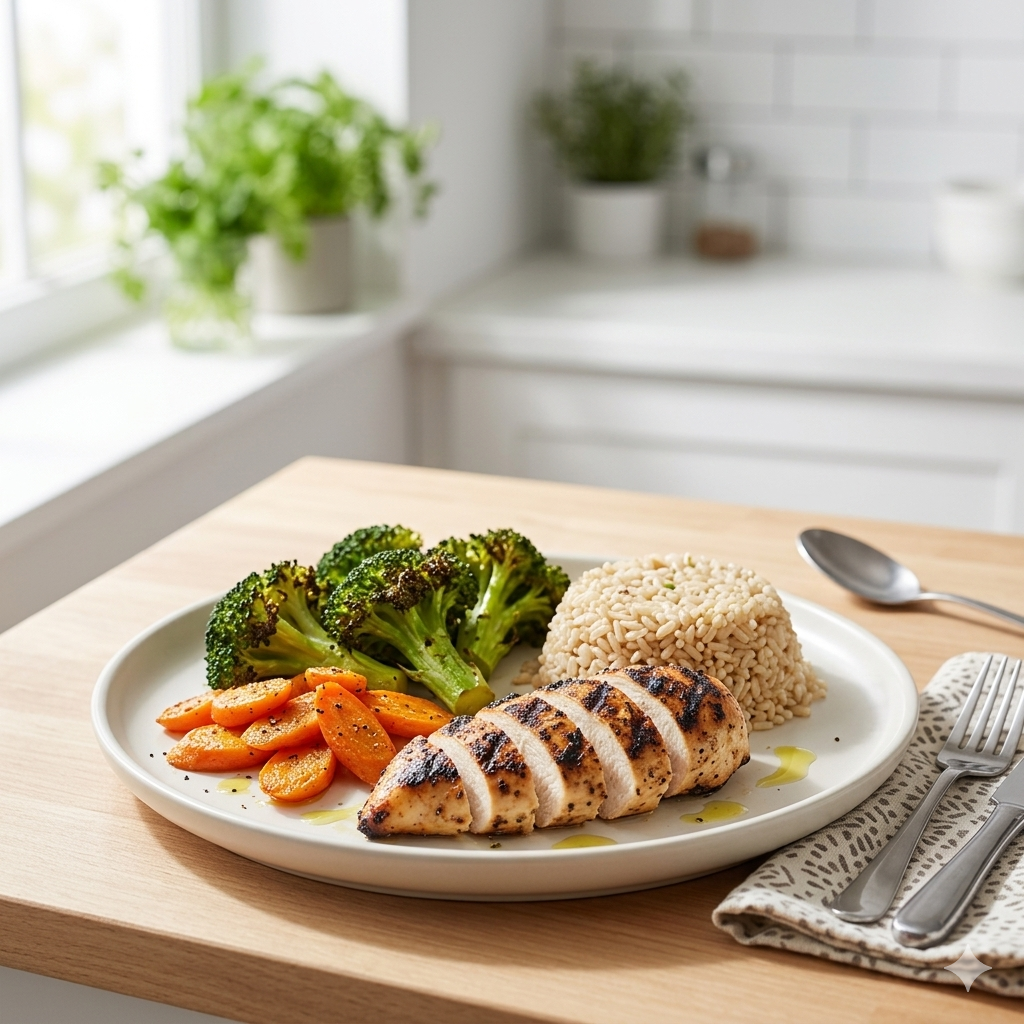
1. Grilled Chicken Veggie Bowl
A colorful balanced meal perfect for lunch or dinner.
Ingredients
1 grilled chicken breast
1 cup roasted broccoli and carrots
1/2 cup brown rice
1 teaspoon olive oil
Salt and pepper
Step-by-Step Preparation
- Preheat the oven to 400°F.
- Chop broccoli and carrots into bite-sized pieces.
- Toss vegetables with olive oil, salt, and pepper.
- Roast vegetables in the oven for 20 minutes.
- Cook brown rice according to package instructions.
- Season chicken breast with salt and pepper.
- Grill the chicken for 6–7 minutes per side until fully cooked.
- Fill half your plate with roasted vegetables.
- Place grilled chicken on one quarter of the plate.
- Add brown rice to the remaining portion.
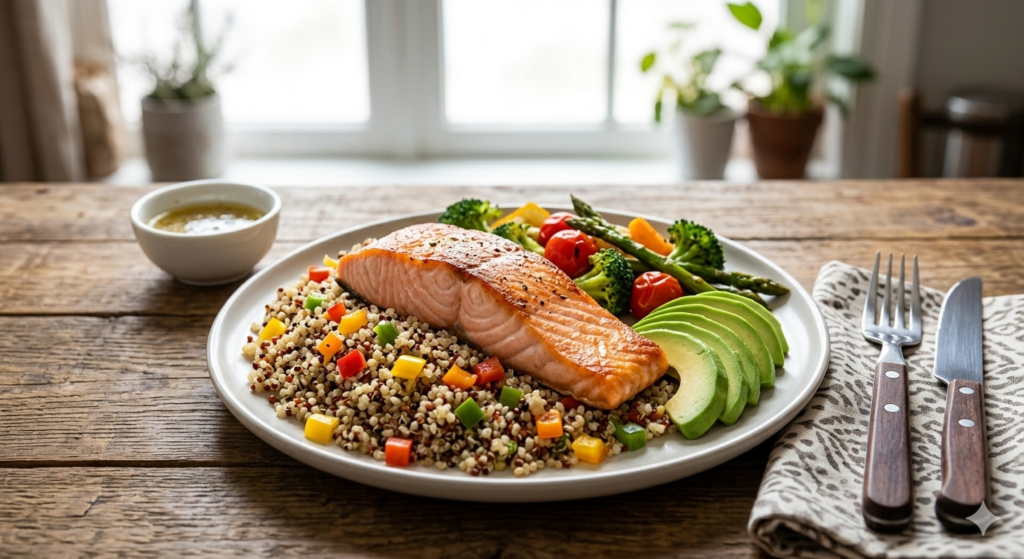
2. Salmon and Avocado Quinoa Plate
A nutrient-rich meal packed with healthy fats and protein.
Ingredients
1 salmon fillet
1/2 cup cooked quinoa
1 cup mixed vegetables (zucchini, spinach, carrots)
1/4 avocado sliced
1 teaspoon olive oil
Step-by-Step Preparation
- Preheat the oven to 400°F.
- Place salmon on a baking tray and drizzle lightly with olive oil.
- Bake the salmon for 12–15 minutes until tender.
- Cook quinoa according to instructions.
- Steam or sauté vegetables until soft.
- Fill half the plate with vegetables.
- Place salmon on one quarter of the plate.
- Add quinoa to the remaining quarter.
- Top the meal with avocado slices.
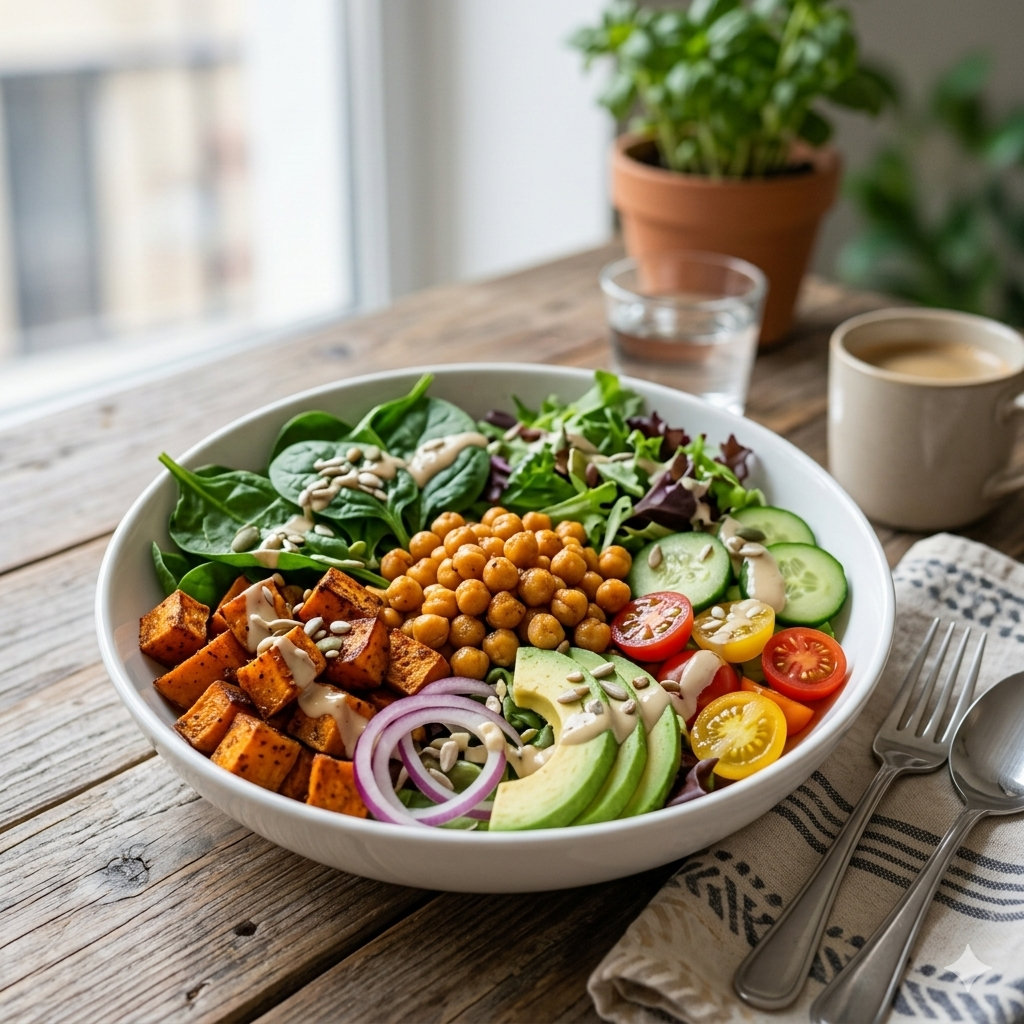
3. Chickpea Sweet Potato Nourish Bowl
A plant-based meal that is hearty and satisfying.
Ingredients
1 cup roasted sweet potatoes
1/2 cup chickpeas
1 cup mixed greens
1 tablespoon olive oil
1 teaspoon lemon juice
Step-by-Step Preparation
- Preheat oven to 400°F.
- Cut sweet potatoes into cubes.
- Toss sweet potatoes with olive oil and roast for 25 minutes.
- Rinse and drain chickpeas.
- Place mixed greens in a bowl.
- Add roasted sweet potatoes and chickpeas.
- Drizzle lemon juice over the bowl and toss lightly.
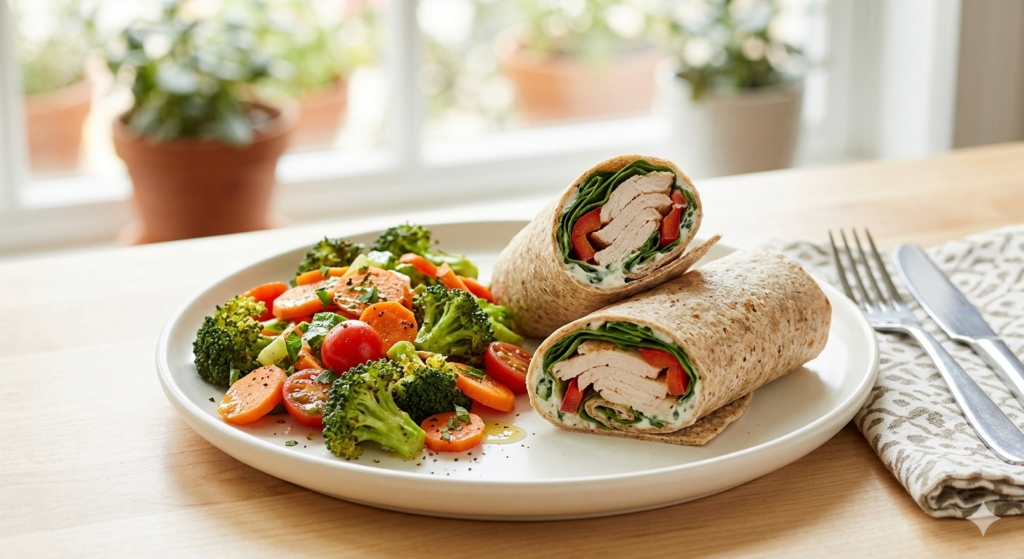
4. Turkey Whole Grain Wrap with Fresh Salad
A quick and simple balanced lunch.
Ingredients
1 whole grain tortilla
1/2 cup sliced turkey breast
1 cup lettuce
1/2 cup cucumber slices
1 tablespoon yogurt dressing
Step-by-Step Preparation
- Lay the tortilla flat on a clean surface.
- Place lettuce and sliced turkey in the center.
- Add cucumber slices.
- Drizzle yogurt dressing lightly.
- Roll the tortilla tightly to form a wrap.
- Serve with extra vegetables on the side.
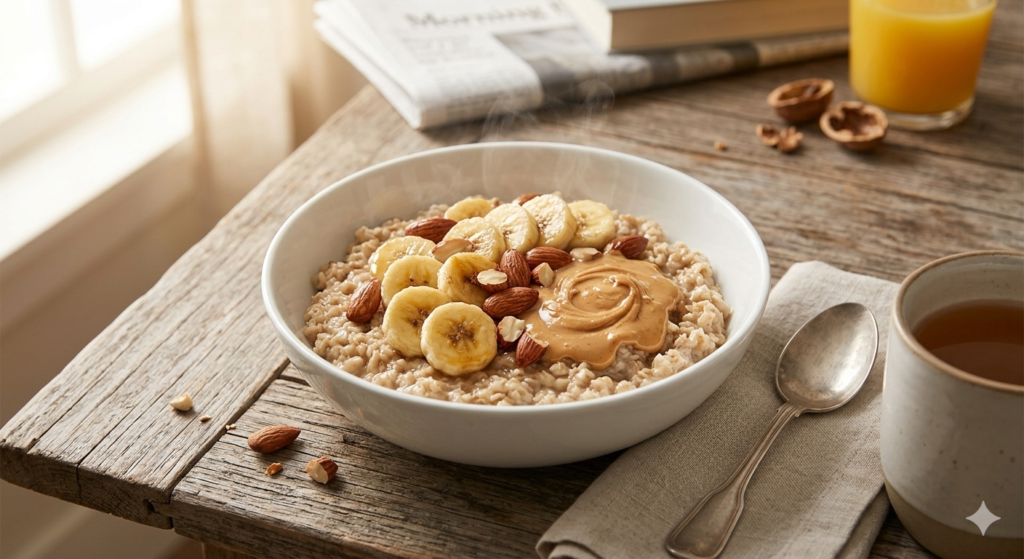
5. Oatmeal with Fruits and Nuts
A balanced breakfast that provides energy and fiber.
Ingredients
1/2 cup rolled oats
1 cup milk or water
1 tablespoon almonds
1 tablespoon peanut butter
1/2 banana sliced
Step-by-Step Preparation
- Bring milk or water to a boil in a saucepan.
- Add oats and reduce heat.
- Cook oats for 4–5 minutes while stirring.
- Pour oatmeal into a bowl.
- Top with banana slices and almonds.
- Add peanut butter for healthy fat and extra flavor.
Tips for Building Colorful and Delicious Plates
Use a variety of vegetables to add color and nutrients.
Choose different protein sources throughout the week.
Use herbs and spices to add flavor without excessive salt.
Cook meals using healthy methods such as grilling, baking, steaming, or roasting.
Plan your meals ahead of time to maintain consistency.
Final Thoughts
Healthy eating does not need to be complicated or restrictive. The simple balanced plate rule makes nutrition practical and easy to follow.
By filling half your plate with vegetables, adding a palm-size portion of protein, including a fist-size portion of healthy carbohydrates, and finishing with a thumb-size portion of healthy fats, you create meals that nourish your body and support long-term wellness.
Balanced meals can be colorful, satisfying, and full of flavor. With simple ingredients and thoughtful preparation, healthy eating can become an enjoyable and sustainable part of your everyday lifestyle.